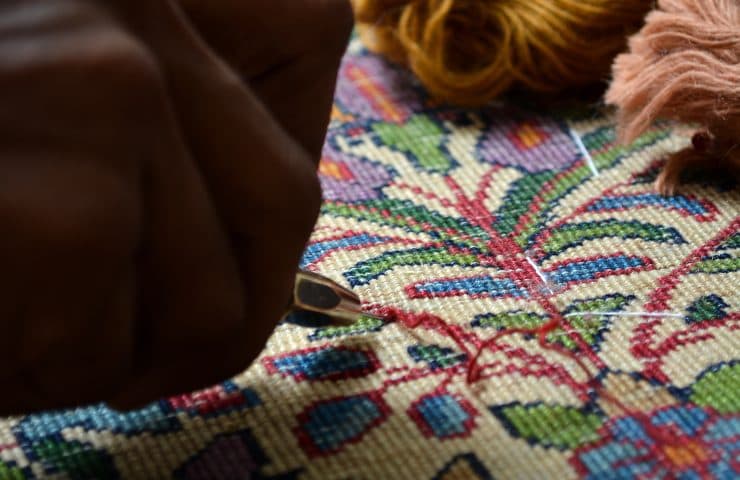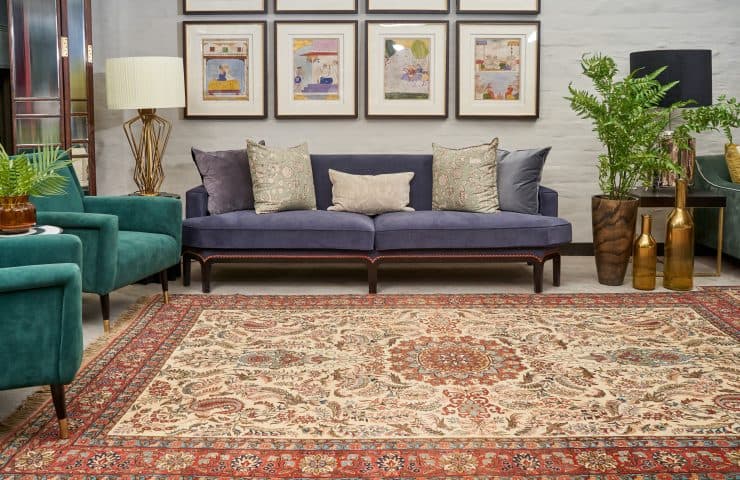
Few names carry as much weight in carpet history as Hadji Jalili, the Tabriz master whose late-19th-century workshop turned the pictorial rug into fine art. His palette of soft ivories, dusted blues and warm rose is still the reference point designers reach for when a rug needs to anchor a room rather than just cover a floor.
From workshop piece to living-room centerpiece
What made Jalili's carpets radical in their own time — oversized florals, open fields, a willingness to leave space unfilled — is exactly what makes them read as modern now. A single well-placed antique-style rug does more for a minimalist room than a wall of decor ever could.
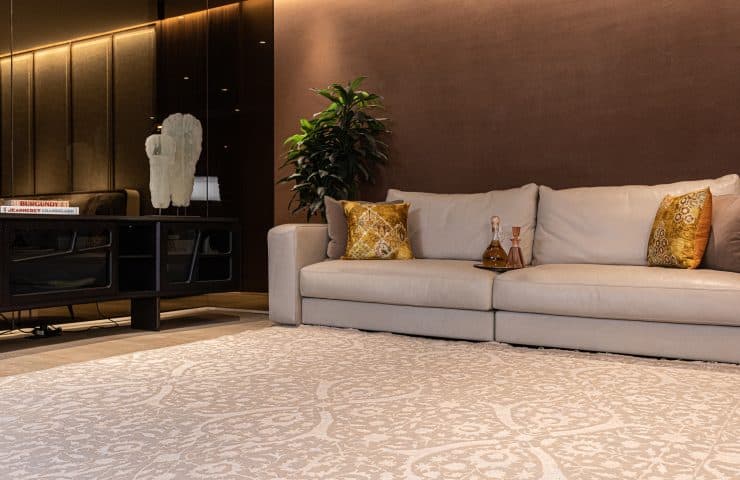
Contemporary interior designers borrow this restraint deliberately: one statement carpet, kept as the room's only pattern, with furniture and walls left quiet enough to let the weave do the talking.